



Are Smart Locks More Secure Than Traditional Locks? (Detailed Analysis)
Home and workplace security is undergoing a radical transformation with the advancement of technology. Mechanical locks, which have been a part of our lives for centuries, are being replaced by smart lock systems in the digital age. However, this transition period raises a fundamental question in consumers’ minds: Are smart locks more secure than traditional locks, or do they create a new vulnerability to cyber risks?
This article will examine the security architecture of smart locks from the perspective of a security expert; discuss their differences from mechanical locks, the scenarios users fear most (hacking, battery failure, etc.), and touch upon the most reliable solutions in the Turkish market.
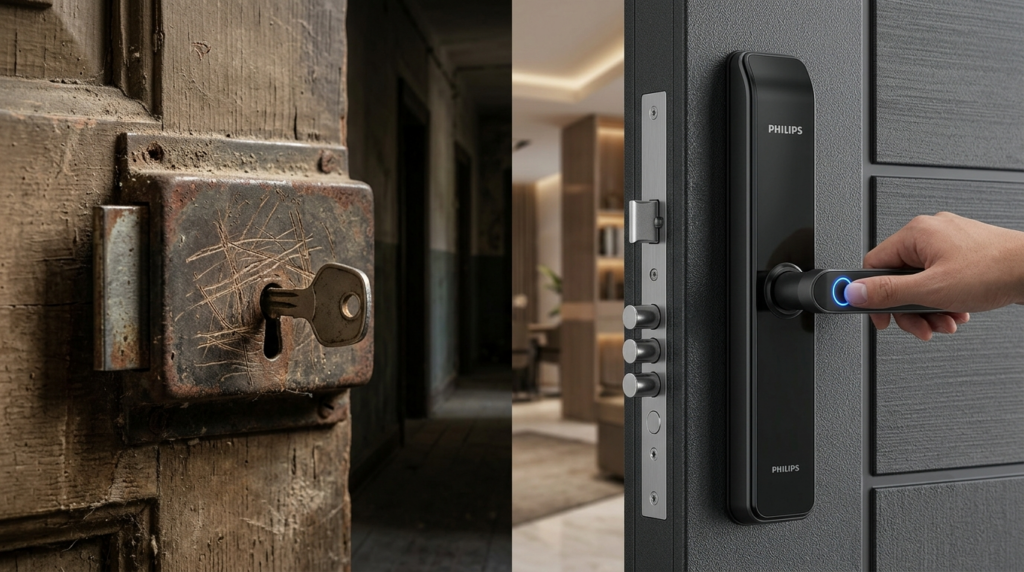
1. Traditional Locks and Smart Locks: A Security Comparison
Geleneksel kilitlerin güvenliği, tamamen kullanılan malzemenin kalitesine ve anahtar silindirinin (barel) şifreleme kombinasyonuna bağlıdır. Ancak geleneksel kilitlerin en büyük zayıflığı, **fiziki müdahaleler karşı tamamen savunmasız olabilmeleridir**. Çilingir aletleri, maymuncuk kullanımı, delme veya kırma gibi yöntemler, sıradan bir mekanik kilidi dakikalar içinde devre dışı bırakabilir. Ayrıca anahtarın kaybolması veya kopyalanması, mülk güvenliğini tamamen sıfırlar.
Smart locks take security beyond the physical dimension, adding a digital shield.
Physical Security and Cylinder Technology
Contrary to popular belief, high-quality smart locks do not completely eliminate the mechanical mechanism; rather, they improve it. For example, Class C lock cylinders used in luxury segment smart locks offer the highest level of resistance to drilling and breakage.
Digital Security and Encryption
Smart locks are protected by AES 128-bit or 256-bit encryption algorithms, the same ones used in banking systems. This makes it virtually impossible to intercept and copy the signal of a digital lock in mid-air.
2. Advantages of Smart Locks Compared to Traditional Locks
The security provided by smart locks is not limited to simply keeping the door locked. The ecosystem they offer transforms your home into a 24/7 monitored fortress.
Audit Trail: You can instantly see who entered your home, at what time, and by what method (fingerprint, password, card) via the mobile application. With traditional locks, it’s impossible to know if the door was opened while you were away. Temporary Password Management: You can define one-time passwords or passwords valid for specific hours for guests, cleaning staff, or couriers. The hassle of handing over keys and the risk of keys being copied are completely eliminated. Instant Notifications and Alarm Systems: When the door is forced open, the password is entered incorrectly multiple times, or the door is left open, smart locks trigger a local alarm and send instant notifications to your smartphone.
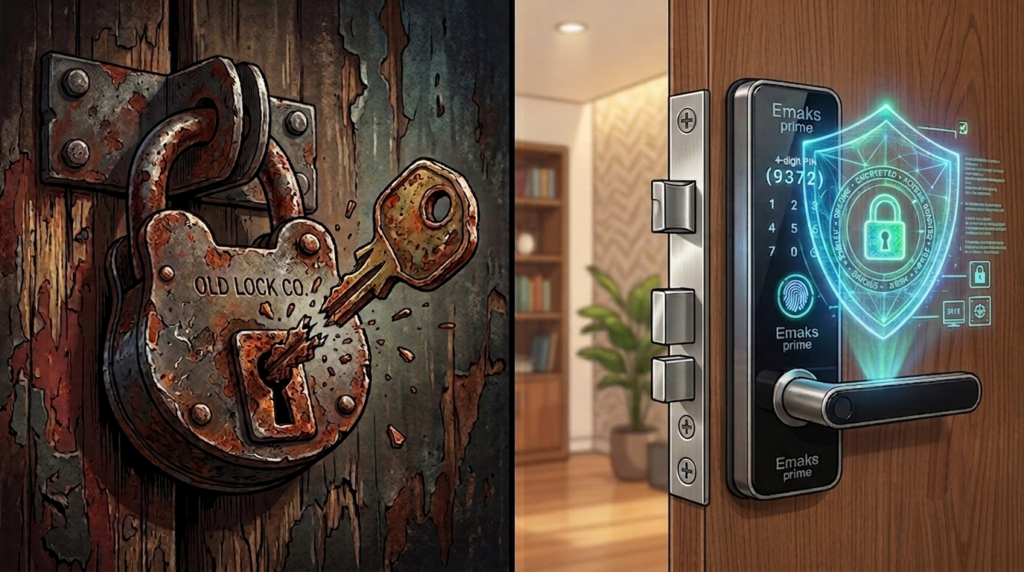
3. Biggest Buyer Fears: Hacking and Battery Drainage
Here are two major urban legends and technical facts that cause hitmen to be wary of smart locks:
Fear #1: “Can smart locks be hacked?”
Theoretically, any internet-connected device can be hacked. However, modern smart locks boast the highest security protocols among smart home devices. The time, energy, and technical knowledge a cyber attacker would spend hacking your front door is far greater than breaking a physical door. Because Wi-Fi and Bluetooth connections are end-to-end encrypted (E2E), it’s practically impossible for an ordinary burglar to digitally open these locks.
Fear #2: “What if the battery dies or the power goes out? Will I be stuck outside?”
This is the most frequently asked question by smart lock buyers. Almost all smart locks are designed to keep you locked out when the battery dies or the power goes out:
1. Low Battery Warning: When the lock’s battery is running low (around 15-20%), it alerts the user weeks in advance with an audible and mobile notification every time the lock is opened.
2. Emergency Power Input: Even if the battery is completely dead, you can temporarily power the lock by connecting a power bank to the Type-C or Micro-USB port on the outer panel and enter with your password.
3. Mechanical Backup Key: Most premium models have a mechanical backup key slot located in a hidden compartment. Even in the worst-case scenario, you can open the lock with a classic key.
4. Leader of the Turkish Smart Lock Market: Emaks Prime
In Türkiye, when it comes to smart locks and digital security systems, Emaks Prime, a market leader and pioneer in technological transformation, sets the dynamics of the market. Beyond being just a seller or distributor, Emaks Prime manufactures high-quality Emaks Prime smart door handles, focusing directly on user needs. It offers domestically produced solutions that are perfectly compatible with Turkish door structures (especially heavy steel doors), boast fingerprint reading speeds measured in milliseconds, and stand out with their durable materials.
Emaks Prime is the Official Representative of Philips Smart Lock and Smart Eyeglasses Lock Boxes.
While leading the market with its own brand, Emaks Prime is also the official authorized dealer and representative of the global technology giant Philips in Türkiye.
For users seeking a premium, global security standard at home or in the workplace, Philips smart lock systems, offered with Emaks Prime assurance, allow you to see who is at your door live on your phone with models that include built-in cameras (smart door handles with cameras). In addition, for those who want to protect their valuables, documents, and jewelry with top-level digital encryption and fingerprint technology, Philips smart safes are also offered in the Turkish market with Emaks Prime distributorship and technical service guarantee.
5. Which Model Should You Choose? (Product Recommendations)
If you want to get rid of the risks of traditional locks and switch to a smart system, you can examine the following solutions featured in the Emaks Prime portfolio:
| Product Category | Featured Features | Suitable for Which Users? |
| Emaks Prime | Smart Door Handles | offer a price-performance ratio, high-quality domestic production, fast fingerprint recognition, and a stylish design. Ideal for homes, modern offices, andAirbnb rental apartments | .
| Philips Smart Locks | with Cameras (e.g., DDL709 | ) feature built-in video surveillance, remote two-way communication, and AI-powered facial recognition. For those seeking maximum luxury, technology, and top-tier steeldoor security | .
| Philips Smart Safe Boxes | :Biometric fingerprint protection | , redundant encryption, and a smart alarm system in case of forced entry. For those who want to digitally secure their physically valuable assets in home andoffice environments | .
Conclusion: Is a Smart Lock Worth Buying?
To put it clearly: Yes, smart locks are much more secure than traditional locks. Unlike the “passive” security offered by traditional locks, smart locks provide an “active” security ecosystem. You know when your door is opened, you eliminate the need to carry keys with temporary passwords, and you can manage your home remotely.
In Türkiye, to safely experience this technology and receive proper installation and uninterrupted technical service support, you can secure your home for the future by choosing Emaks Prime solutions, the market leader, and Philips smart lock and safe series, for which it is the official representative.
Frequently Asked Questions (FAQ)
Do smart locks fit every door?
Smart door handles manufactured by Emaks Prime and Philips models are fully compatible with most standard steel doors, wooden doors, and aluminum office doors in Türkiye. It is recommended to check door dimensions before installation.
What happens if the app crashes or I lose my phone?
Even if you lose your phone, you can still open your door with your fingerprint, physical card, or manual password. You can also instantly revoke the authorization of your old phone by logging into your account from another device.
How long does the battery life of smart locks last?
Depending on usage frequency and model specifications (such as whether it has a camera or not), batteries typically last between 8 and 12 months.


